An exploration of Eros in mythology, philosophy, psychology, and astrology. Learn how Eros differs from Venus and why longing functions as an intelligent, disruptive force.
Key Takeaways:
Eros is more than desire, it’s a force that shapes connection, creativity, and attention.
Eros and Venus differ: Venus seeks harmony, while Eros drives immersion and fascination.
In astrology, Eros reveals instinctual longing and what truly magnetizes a person.
Who or What is Eros?
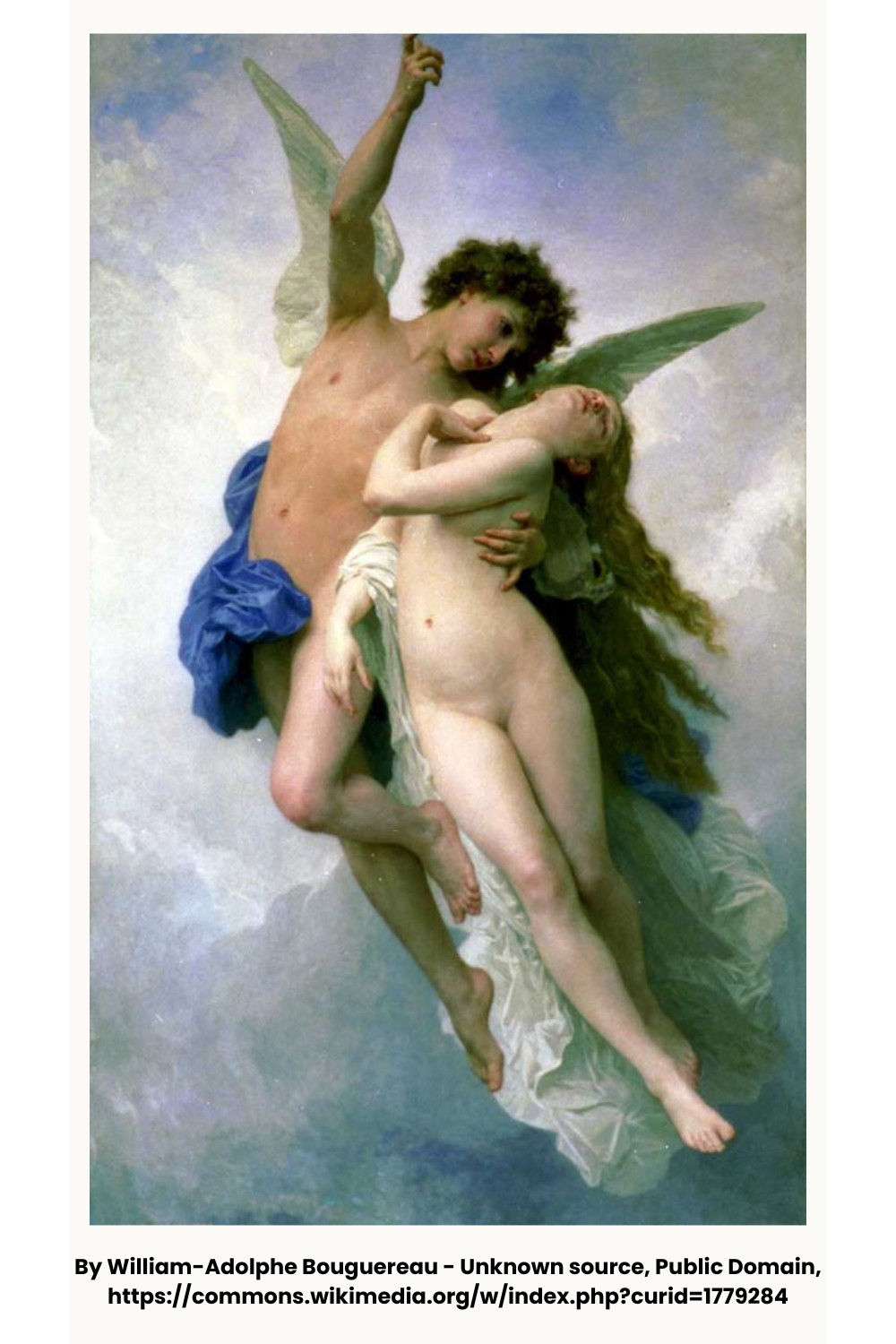
Eros refers to the organizing force of desire that moves the soul toward connection and creation. In Greek mythology, Eros is portrayed as both a primordial force present at the dawn of creation and a later anthropomorphic god whose arrows provoke love and longing.
Eros in Philosophy: From Plato to Neoplatonism
Eros is often spoken about as if it were synonymous with sex, passion, or romantic intensity. In popular language, the word tends to point toward desire that feels overwhelming or irrational. Historically, though, Eros is not a feeling that comes and goes. It operates as an organizing force. Long before psychology or astrology attempted to categorize desire, Eros functioned as an explanation for longing, for why anything reaches toward anything else at all.
In Hesiod’s Theogony, Eros emerges shortly after Chaos, alongside Gaia and Tartarus. This placement tells us something important. Eros is not the result of creation, it is one of its conditions. Without Eros, there is no movement toward union, no reproduction, no continuity.
Plato later gives Eros a more interior life. In The Symposium, Eros is described as a daimon, a being that exists between the mortal and the divine, between lack and fulfillment.
Eros desires because it knows something is missing. Desire, in this framework, is evidence that the soul recognizes meaning before it possesses it.
Plato’s ladder of Eros is often misunderstood as an attempt to spiritualize desire away from the body. In practice, it does the opposite. The ascent begins with physical attraction because the body is where desire announces itself first. Attraction leads to fascination, fascination to admiration, admiration to devotion to ideals and truth. Eros moves through form.
This idea continues into later philosophical traditions. In Neoplatonism, Eros becomes the magnetic pull between the soul and the divine intellect. The soul longs because it remembers something prior to embodiment. It points the soul in a particular direction.
Eros and the Life Instinct in Modern Psychology
Modern psychology reframes Eros once again. Freud places Eros opposite Thanatos, the death drive. Eros governs life instincts, attachment, creativity, sexuality, and cohesion. Importantly, Freud’s Eros includes the drive to create, to learn, to bond, and to preserve. Thanatos pulls toward decay, while Eros drives life and connection.
Eros in Astrology
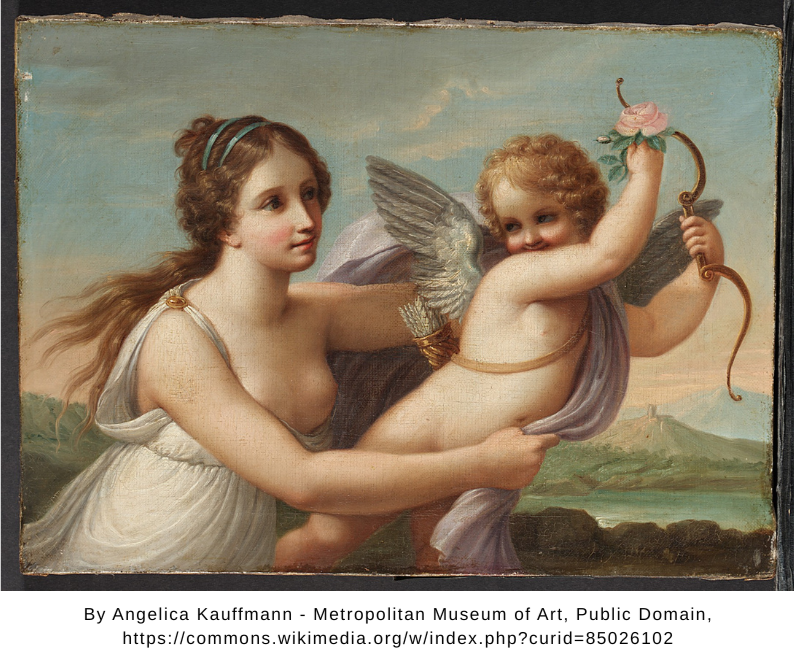
Astrology adds a practical layer to this conversation. In astrological work, Eros appears as an asteroid and its symbolism is precise. Eros in the birth chart describes how desire functions at an instinctual level. It shows what magnetizes us without asking for permission from reason, morality, or social expectation. Eros points toward what feels charged, compelling, and difficult to ignore.
This is where confusion often arises, particularly between Eros and Venus. Venus governs attraction through harmony, pleasure, value, and reciprocity. Venus wants desire that can be lived with. She is concerned with balance, mutual exchange, and sustainability. Eros is not interested in balance. Eros is directional. It consumes attention and often disrupts comfort. Some might call it a raw, instinctual urge.
In a birth chart, Venus shows how someone loves and what they value. Eros shows what captures them. Venus seeks mutuality. Eros seeks immersion. Venus asks whether something is worth investing in. Eros asks whether one can look away. Neither is inherently better, but they serve very different psychological and spiritual functions.
Eros in the chart often marks areas of obsession, fixation, or deep fascination. Its house placement shows where desire insists on expression. Its sign colors the style of longing. Its aspects describe whether that longing integrates smoothly or destabilizes other parts of the psyche.
Working With Eros
Historically, cultures that worked consciously with desire understood that Eros required containment, not repression.
Desire that is ignored does not disappear.
Desire that is indulged without awareness consumes indiscriminately.
Eros demands engagement, discernment, and sometimes restraint.
Venusian work, by contrast, focuses on cultivation. Venus teaches how to receive pleasure, how to form bonds, how to value oneself and others. Venus stabilizes. Eros destabilizes, often in service of truth. Together, they describe the full spectrum of attraction, from what sustains us to what awakens us.
In modern discourse, both forces are diminished. Venus becomes aesthetic and superficial. Eros becomes taboo or entertainment. In older systems, desire pointed toward fate, devotion, creativity, or undoing. To feel Eros was to encounter something meaningful, not necessarily something safe.
Eros is neither light nor dark. It moves consciousness toward what feels alive. Astrology does not moralize this movement. It reminds us that desire is not something to overcome, but something to understand.
Here are a few ideas to get you started
Begin by locating the asteroid Eros (433) in your natal chart using an online chart calculator or astrology software that includes asteroids like Astro.com. Note the sign and house placement first. The sign describes the style of desire, while the house reveals where longing insists on expression in your life.
Next, look at any close aspects Eros makes to personal planets, especially Venus, Mars, the Moon, and Pluto. These connections show how instinctual desire interacts with love, drive, emotion, and intensity. Strong aspects often indicate themes of fixation, fascination, or creative compulsion.
Pay attention to where Eros feels non-negotiable. Unlike Venus, Eros doesn’t describe what you prefer, but what repeatedly pulls your attention, even when it disrupts comfort or logic. Reflect on moments in your life where attraction, obsession, or creative urgency felt unavoidable. These experiences often mirror Eros’ placement more clearly than theory alone.
Finally, approach Eros with curiosity. Recognizing what your psyche finds alive and charged. Awareness is the first form of integration. Eros reveals itself most clearly when it is observed.
Further Reading on Eros
Plotinus, The Enneads (3.5 “On Love”) – Eros and love are presented as the soul’s guiding forces, moving it from the material world toward higher unity and illuminating the transformative power of desire.
The Philosophy of Plotinus: Neoplatonism and the Dynamics of Desire by John Dillon – A modern overview linking classical Neoplatonic texts to contemporary philosophical discussions on desire, love, and Eros.
